Books
Technically, I'm in one of these. The rest are the books on AI and technology that shaped how I think about the work. Some are new. Some are old enough to grade on how well they aged.
Newest first. 18 books.
-
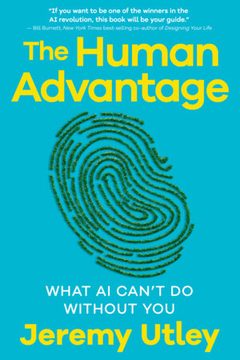
The Human Advantage
Utley argues that people with 10 to 20 years of experience hold the unfair advantage in AI work: judgment, taste, and context the model can't supply on its own. Full disclosure: I'm in Chapters 9 and 10.
-
Co-Existence
The sequel to Co-Intelligence, written for the agent era instead of the chatbot era. Mollick's question: how do you work with AI that is sometimes, but not always, better than you?
-
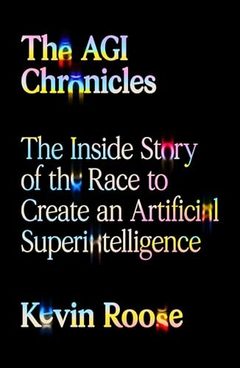
The AGI Chronicles
Roose's reported account of the race inside OpenAI, Google DeepMind, and Anthropic to build AGI. The people, the rivalries, and the bets, from a reporter who had the access.
-
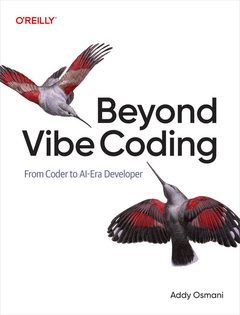
Beyond Vibe Coding
What comes after the demo: how experienced engineers review, test, and ship code an AI wrote. A field manual for teams moving from prompting to delegation.
-
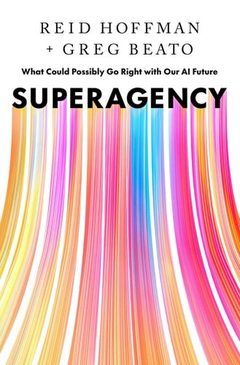
Superagency
Hoffman's case for AI optimism: individual agency compounds when millions of people get capable AI at the same time. Read it next to The Coming Wave and decide where you land.
-
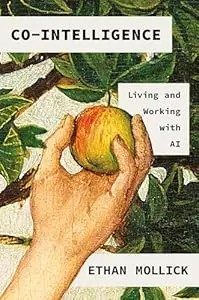
Co-Intelligence
Four rules for working with AI, starting with "always invite AI to the table" and ending with "assume this is the worst AI you will ever use." The models moved on. The habits held.
-
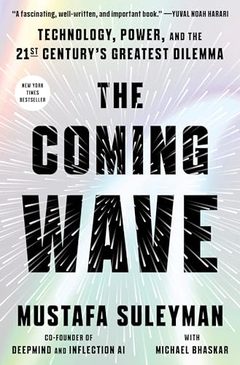
The Coming Wave
The DeepMind co-founder argues that AI and synthetic biology will be close to impossible to contain, and that containment is still the job. The sober counterweight to Superagency.
-
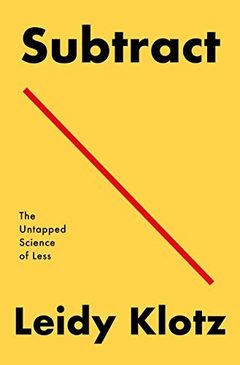
Subtract
Klotz shows that we default to adding when we try to improve things and overlook taking away. The best workflow-redesign question I know: before you add an agent, what can you remove?
-
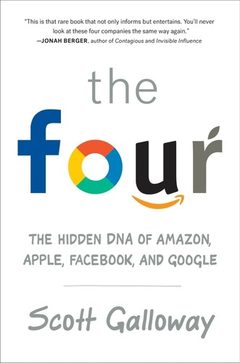
The Four
Amazon, Apple, Facebook, and Google, mapped to the instincts they serve and the moats they built. Swap in the AI labs and the framework still works.
-
Irresistible
How products get engineered for compulsion: goals, feedback, progress, escalation, cliffhangers, and social pull. Required reading for anyone designing an AI companion, so they know what not to build.
-
Superintelligence
The book that put AI risk on executive reading lists. Bostrom works through how a system smarter than us might arrive and why control gets hard once it does.
-
The Second Machine Age
The economics of digital progress: exponential improvement, digitization, and recombinant innovation. Plus the question we still haven't answered, which is who captures the gains.
-
How to Create a Mind
Kurzweil's pattern-recognition theory of mind: the neocortex as a hierarchy of pattern recognizers, and a blueprint for building one in software. Deep learning made a lot of it look early rather than wrong.
-
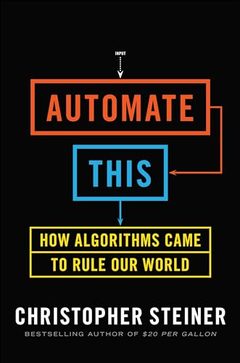
Automate This
How algorithms took over Wall Street, then moved on to music, medicine, and hiring. A clean history of the wave before the transformer.
-
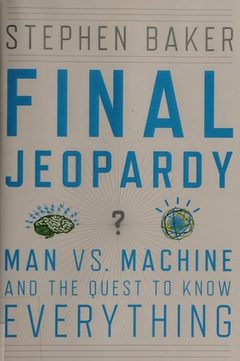
Final Jeopardy
Inside IBM's effort to build Watson and beat the best Jeopardy players. Worth rereading to see how hard question answering used to be, and which promises took another decade to keep.
-
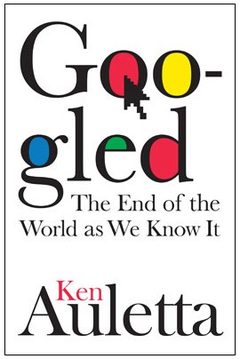
Googled
How Google upended media and advertising, told with access to Page, Brin, and Schmidt. A preview of the distribution fight now playing out over AI answers.
-
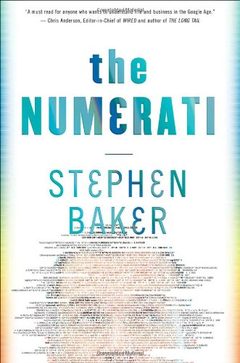
The Numerati
The mathematicians modeling us as workers, shoppers, voters, and patients. The data trail Baker described in 2008 became the raw material for everything that followed.
-
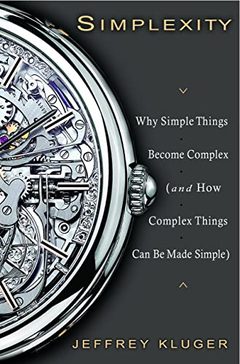
Simplexity
Why simple things turn complex and complex things can be made simple, from markets to families to machines. A useful check on any system that adds features faster than value.